
Germans have a reputation for being reserved in public, but that reputation falls apart the moment you hear how they talk to the people they love. German pet names lean heavily on animals, treasure, and sugar, turning ordinary words like mouse or bunny into some of the warmest things you can call someone. If you’re curious about German nicknames, you’re looking at a language with a genuinely sweet, slightly quirky side.
This guide breaks down the most common German nicknames, organized by how they’re actually used, from everyday terms between partners to the animal based pet names Germans reach for constantly. Each one comes with its real meaning and a note on who it typically gets used for.
The Story Behind German Nicknames
German terms of endearment are known as Kosenamen, and the tradition runs across every kind of close relationship, romantic partners, family, and even close friends. Unlike some languages where pet names stay strictly private, plenty of German nicknames get used loudly and openly, you’ll hear parents calling out Schatz to their kids on any playground in Berlin.
What stands out most about German nicknames is how much they lean on the animal kingdom. Words like Maus, meaning mouse, and Hase, meaning bunny, are some of the most common terms of endearment in the entire language, which says a lot about which qualities Germans associate with affection, cuteness, cuddliness, and a kind of gentle warmth.
How German Diminutive Suffixes Work
Much like other European languages, German has a simple grammar trick for turning almost any word into a nickname. Adding chen or lein to the end of a word makes it sound smaller and more affectionate, which is how Bär, meaning bear, becomes Bärchen, meaning little bear, and Herz, meaning heart, becomes Herzchen, meaning little heart or darling.
Another common pattern is simply adding an i sound to the end of a name or word, or repeating its first syllable. That’s how a name like Klaus becomes Klausi, or Paul becomes Paulchen, and it’s also how people build entirely personal, invented nicknames on the spot rather than sticking to the standard list.

Classic German Terms Of Endearment
These are the everyday nicknames you’ll hear constantly in German, used across nearly every kind of close relationship.
| No. | Nickname | Meaning |
|---|---|---|
| 1 | Schatz | Treasure, the single most common German term of endearment |
| 2 | Schatzi | A softer, more playful version of Schatz |
| 3 | Liebling | Darling, a warm and slightly old fashioned term |
| 4 | Süße / Süßer | Sweet one, used for a woman or a man |
| 5 | Liebes | Darling, a gentle term also used between friends |
| 6 | Herzblatt | Literally heart leaf, a sweet way to say sweetheart |
| 7 | Herzchen | Little heart, used to mean darling |
| 8 | Engel | Angel, popular for women and children |
| 9 | Schnucki | Sweetie pie, a gender neutral term with no other meaning |
| 10 | Mein Schatz | My treasure, adds a personal touch to Schatz |
Romantic German Nicknames For A Partner
Slightly more intimate terms that lean specifically toward couples.
| No. | Nickname | Meaning |
|---|---|---|
| 1 | Mein Schatz | My treasure |
| 2 | Mein Süßer / Meine Süße | My sweet one |
| 3 | Lieblingschatz | Favorite treasure, a step up from a plain Schatz |
| 4 | Riesenschatz | Giant treasure, a bigger, more dramatic version of Schatz |
| 5 | Herzblatt | Heart leaf, a classic way to say sweetheart |
| 6 | Zuckerschnute | Sugar mouth, sweet and a little playful |
| 7 | Schnuckibär | Little cuddle bear |
| 8 | Perle | Pearl, especially popular in the Ruhr Valley region |
| 9 | Mein Herz | My heart |
| 10 | Meine Süße | My sweetheart, used specifically for a woman |
Animal Inspired German Nicknames
Germany’s pet name culture leans heavily on animals, and these are some of the most common.
| No. | Nickname | Meaning |
|---|---|---|
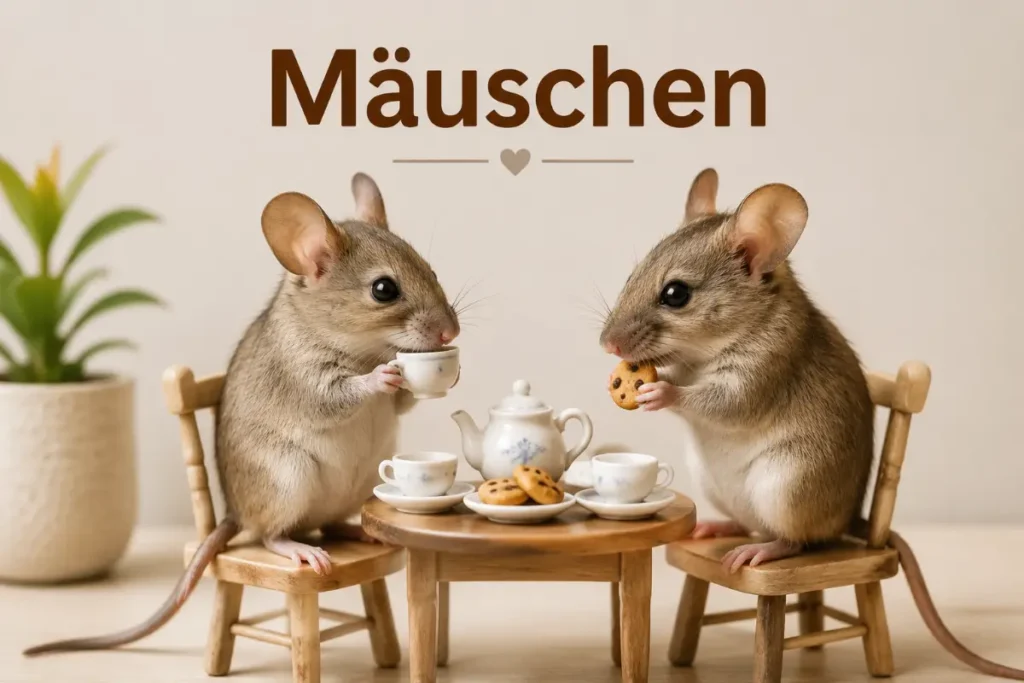
| 1 | Maus | Mouse, one of the most popular German nicknames |
| 2 | Mausi | A softer, diminutive version of Maus |
| 3 | Mäuschen | Little mouse |
| 4 | Hase | Bunny, extremely common for both men and women |
| 5 | Häschen | Little bunny |
| 6 | Hasi | A playful shortened version of Hase |
| 7 | Bär | Bear, used for people of any gender |
| 8 | Bärchen | Little bear, warm and protective sounding |
| 9 | Bärli | A softer variation of Bär |
| 10 | Schnecke | Snail, an odd sounding but genuinely affectionate term |
| 11 | Spatz | Sparrow, a gentle, sweet nickname |
German Nicknames For Family And Kids
Softer, gentler nicknames typically reserved for children and close family.
| No. | Nickname | Meaning |
|---|---|---|
| 1 | Schatz | Used constantly by parents for their kids |
| 2 | Engelchen | Little angel |
| 3 | Engelein | Another gentle form of little angel |
| 4 | Mäuschen | Little mouse, common for a child |
| 5 | Häschen | Little bunny, common for a child |
| 6 | Oma | Grandma |
| 7 | Opa | Grandpa |
| 8 | Omi | An even softer version of Oma |
| 9 | Opi | An even softer version of Opa |
| 10 | Bärchen | Little bear, used warmly with children too |

German Nicknames For Friends
Not every German nickname is romantic. Several cross comfortably into friendship territory too.
| No. | Nickname | Meaning |
|---|---|---|
| 1 | Süße / Süßer | Common between close friends, not just couples |
| 2 | Liebes | Used warmly among friends |
| 3 | Maus | Female friends often call each other this |
| 4 | Hase | Casual and common between close friends |
| 5 | Schatz | Occasionally used between very close friends |
How To Use These Nicknames The Right Way
The biggest thing to understand about German nicknames is how much context shapes which one fits. Schatz works almost anywhere, from a partner to a small child to a very close friend, while something like Riesenschatz or Lieblingschatz is reserved specifically for a romantic partner and would feel strange anywhere else.
Public versus private also matters more in German culture than in some others. Germans tend to be more openly affectionate at home than out in public, though younger Germans, especially those under 40, have grown more comfortable using pet names openly with both partners and friends.
It also helps to remember how flexible German nicknames really are. Since almost any word can take the chen or lein ending, or a simple i sound, Germans regularly build their own personal nicknames on the spot rather than sticking strictly to the standard list.
Frequently Asked Questions
What is the most common German nickname for a partner?
Schatz, meaning treasure, is by far the most common German nickname for a partner, with surveys suggesting nearly two thirds of couples under 30 use some version of it.
What does Maus mean in German?
Maus means mouse and is one of the most popular German terms of endearment, used for partners, friends, and children alike.
Are German nicknames only used for romantic partners?
No. Many, including Schatz, Maus, and Hase, are commonly used with children and close friends as well.
What does Hase mean as a German nickname?
Hase means bunny and is one of the most common German pet names, implying someone is cute, cuddly, and lovable.
Why do so many German nicknames come from animals?
German pet name culture leans heavily on animals like mice, bunnies, and bears, generally associated with cuteness, cuddliness, and warmth.
How do German diminutive suffixes work?
Adding chen or lein to a word makes it sound smaller and more affectionate, which is how Bär becomes Bärchen and Herz becomes Herzchen.
What is a good German nickname for a child?
Gentle options like Schatz, Mäuschen, or Engelchen are common and appropriate ways to address a child affectionately.
Can I make up my own German nickname?
Yes. Since the chen and lein endings can attach to almost any word, Germans frequently invent personal nicknames rather than sticking to the standard list.
Final Thoughts
German nicknames reveal a genuinely sweet side of a language often seen as blunt and formal. Some, like Schatz and Maus, are used so constantly they’ve become part of everyday conversation. Others, built from Germany’s flexible diminutive system, let people invent something entirely personal out of practically any word. Whichever one you use, the real warmth usually comes through in the tone, not just the word itself.
