
Mississippi carries several nicknames, some official, some purely historical, and a couple that sound almost too strange to be real. From a state flower that gave it its most famous name to an old nickname tied to giant river catfish, there’s a real story behind nearly every one.
This guide walks through where Mississippi’s nicknames actually come from and what each one says about the state.
Where The Name Mississippi Comes From
Before getting into the nicknames themselves, it helps to know where the state’s actual name came from. Mississippi takes its name from the Mississippi River, which itself comes from an Ojibwe word, misi ziibi, meaning great river or gathering of waters. French explorers adapted the word after encountering it through Indigenous communities, and it eventually became the name of both the river and the state that formed along its banks. Mississippi became the 20th state in the Union in 1817.
The Magnolia State
This is Mississippi’s official state nickname, and it comes directly from the magnolia tree, which serves as both the state flower and the state tree. The nickname reflects the sheer abundance of magnolia trees found throughout the state, along with the flower’s association with dignity, grace, and Southern tradition more broadly. The nickname appears on Mississippi’s 2002 state quarter, shown alongside an illustration of magnolia blossoms, and it remains the name most commonly used in official and educational contexts today.
The Hospitality State
While not as formally recognized as The Magnolia State, this nickname has still appeared on Mississippi license plates in the past and is widely used by the state’s tourism industry. It reflects the state’s reputation for warmth and Southern hospitality, and it’s often paired with tourism slogans built around the same welcoming image.
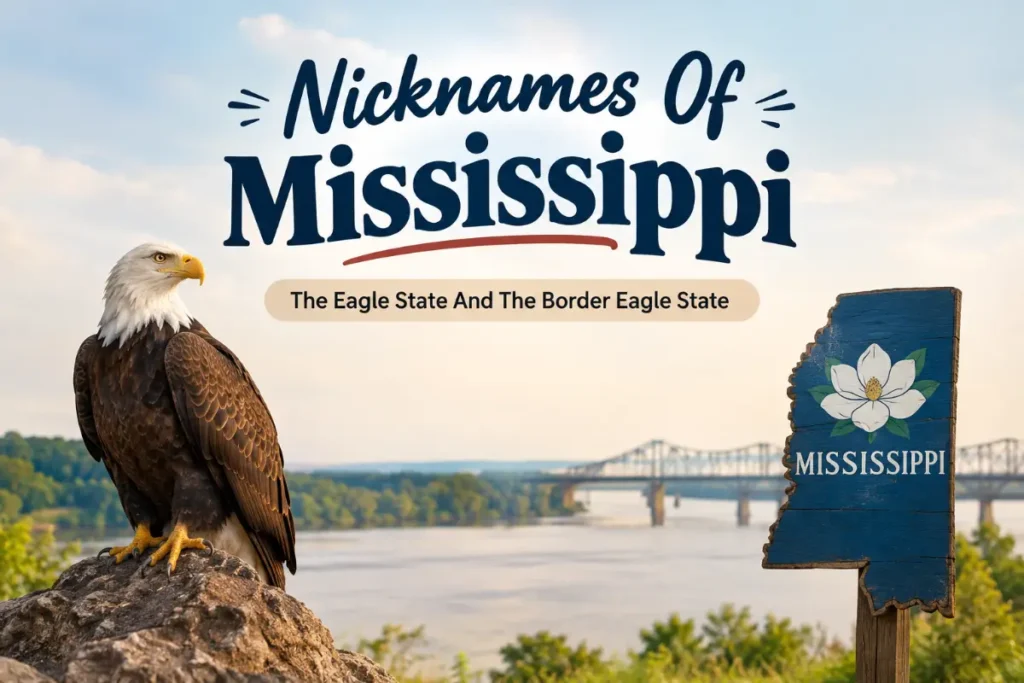
The Eagle State And The Border Eagle State
Both of these nicknames trace back to the bald eagle featured on Mississippi’s coat of arms and state seal, which shows the bird gripping arrows and an olive branch. The Border Eagle State appears to be the older version of the two, first showing up in historical references around 1846, with Eagle State emerging later as a shortened version of the same idea.
The Mudcat State And The Mud Waddler State
These older, less common nicknames both connect to catfish.Mudcat refers to a type of large catfish that historically lived in the muddy waters along the Mississippi and Tennessee rivers. Records document the nickname as early as 1872. The Mud Waddler State appears in an 1892 collection of state nicknames, though no clear explanation for the name has survived, and it likely draws on a similar association with the muddy river landscape.
The Bayou State
This nicknames reflects Mississippi slow moving streams and marshy lowlands, particularly in the southern part of the state as it stretches toward the Gulf Coast. Louisiana has a stronger association with the term bayou today, but Mississippi’s wetland geography also earned the state this nickname historically.
The Groundhog State
One of Mississippi’s stranger historical nicknames, this name likely relates to the state’s groundhog population, though historical records don’t provide a clear explanation for its origin.
The Sipp
This is a much more modern, informal nickname, essentially a shortened, casual version of Mississippi itself. It shows up frequently in music, particularly hip hop from artists connected to the state, as well as in everyday conversation among residents looking for a quicker way to refer to home.
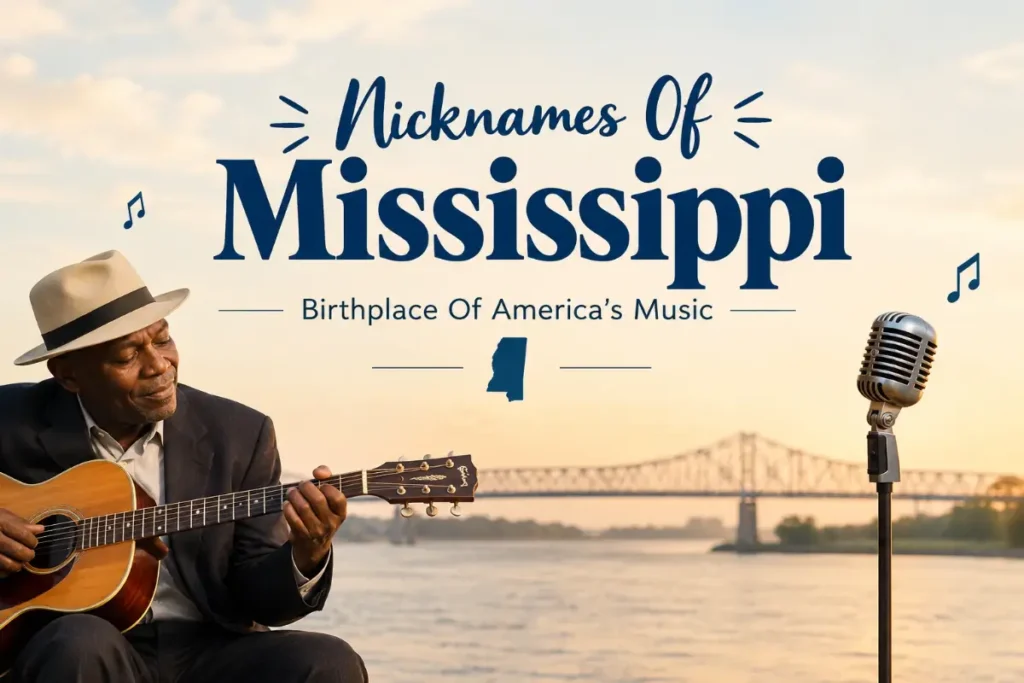
Birthplace Of America’s Music
This isn’t a traditional state nickname but a widely used tourism and cultural tagline that has become closely tied to Mississippi’s identity today. The state played a foundational role in the development of blues music, and that musical legacy, along with connections to gospel, country, and rock and roll, has made this phrase a common way to describe Mississippi’s cultural significance.
Why Mississippi Has So Many Nicknames
Like most states, Mississippi’s nicknames come from a mix of natural symbols, historical coincidence, and evolving cultural identity. Some, like The Magnolia State, gained such wide acceptance that they eventually became official. Others, like The Mud Waddler State, appeared only once in an old book of nicknames and never caught on beyond that. Together, they show how many different things can shape a state’s identity, from its official state flower to a nickname that began as a joke about catfish.
Frequently Asked Questions
What is Mississippi’s official nickname?
The Magnolia State is Mississippi’s official nickname, tied to the magnolia tree and flower, both of which are official state symbols.
Why is Mississippi called the Hospitality State?
The nickname reflects the state’s reputation for warmth and welcoming culture, and it has appeared on state license plates and tourism materials in the past.
What does the Eagle State nickname refer to?
It comes from the bald eagle featured on Mississippi’s coat of arms and state seal.
Why was Mississippi called the Mudcat State?
The nickname refers to a large type of catfish historically found in the muddy waters of the Mississippi and Tennessee rivers.
Where does the name Mississippi itself come from?
It comes from an Ojibwe word, misi ziibi, meaning great river, originally used to describe the Mississippi River before becoming the name of the state.
What does The Sipp mean?
It’s a modern, informal nickname for Mississippi, commonly used in music and everyday conversation as a shortened way to refer to the state.
Final Thoughts
Mississippi’s nicknames tell a story that goes well beyond its official state flower, even though The Magnolia State remains the name most people know today. Some nicknames, like The Eagle State, come straight from official state symbols, while others, like The Mud Waddler State, are little more than historical curiosities with lost origins. Active voice revision:
Together, they capture a state whose identity reflects its rivers, wildlife, and deep cultural roots in equal measure.
